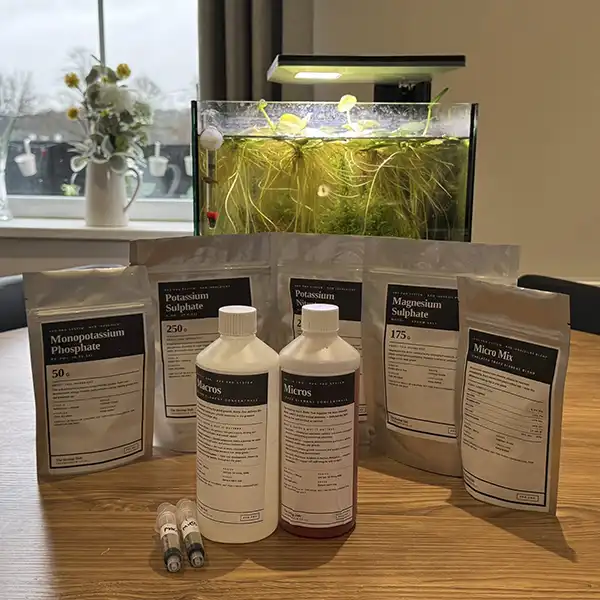
Aquarium plant fertiliser range — kits & compounds

Aquarium plant fertiliser range — complete PPS-Pro kits & individual compounds

Browse the full Aquafertz range of aquarium plant fertilisers — from complete PPS-Pro starter kits to individual top-up compounds. Every product is copper-free, shrimp-safe, pre-measured and ready to use. Free UK delivery on all orders.

Copper-free — shrimp safe formula
Pre-measured & ready to mix
No specialist knowledge needed
Free UK delivery on all orders

Individual aquarium plant fertiliser compounds

Each compound in our range is available individually so you can top up exactly what you need without buying a whole new kit. All are the same high-quality dry powder form used in the full PPS-Pro kit. PPS-Pro is one of the most respected fertilisation methods in the planted tank hobby — you can read more about planted tank fertilisation at Aquasabi for further background. For dosing amounts, see our PPS-Pro dosing guide →

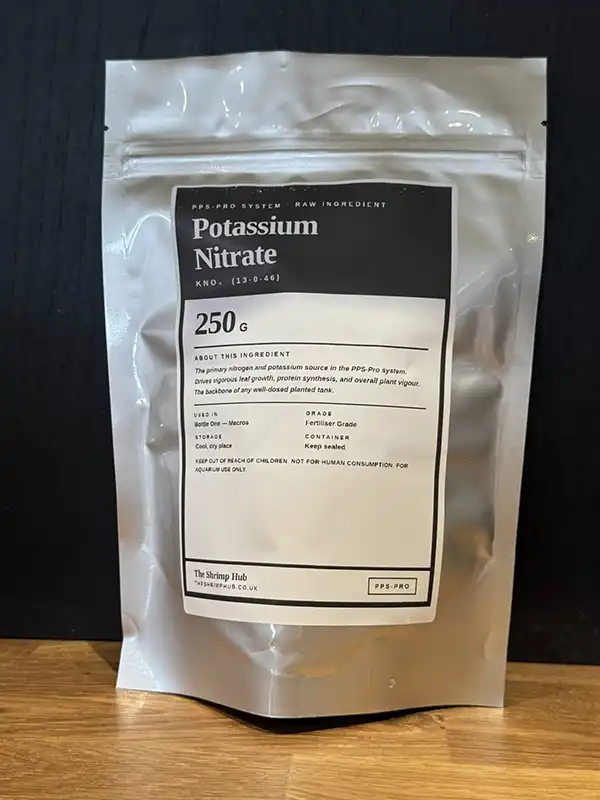
Potassium Nitrate aquarium plant fertiliser compound 250g — KNO3 for planted tanks
Macronutrient · 250g

Potassium Nitrate (KNO₃)

The primary nitrogen source in the PPS-Pro macro bottle. Nitrogen is the nutrient aquarium plants consume most — it drives leaf growth, stem strength, and that deep green colour everyone wants.

What it does

Nitrogen is the engine of plant growth — a core building block of amino acids, proteins, and chlorophyll. The potassium component supports water regulation, enzyme function, and overall cell health across all plant types.

Benefits for your plants

Healthy nitrogen levels produce lush, deep green leaves with strong upright stems. Fast-growing stem plants show dramatic improvement in growth rate. Carpeting plants fill in more densely and slower-growing species maintain better colour throughout.

Signs of deficiency

Yellowing starts on the oldest leaves first — pale from the midvein outwards, eventually turning entirely yellow. Growth slows and stems become weak. Because nitrogen is mobile, the plant moves it from old leaves to new growth, so symptoms always appear on older leaves first.

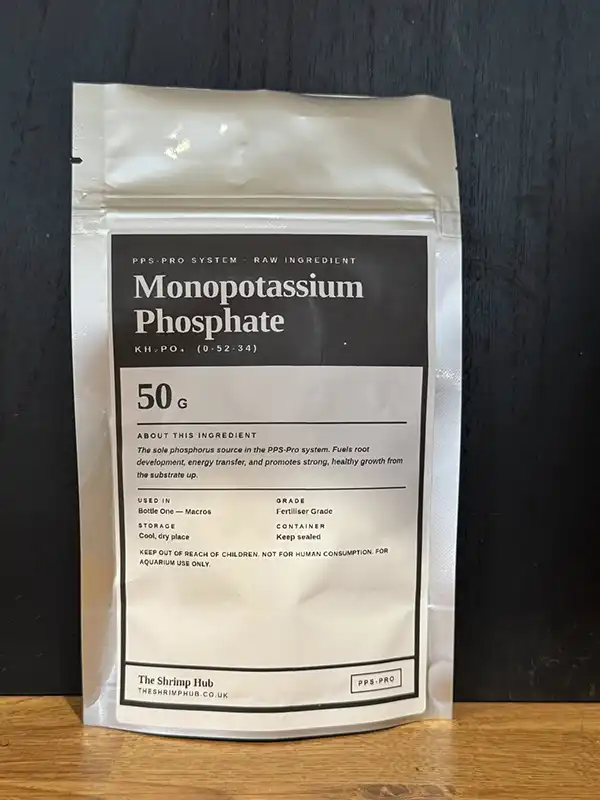
Monopotassium Phosphate aquarium plant fertiliser compound 50g — MKP for planted tanks
Macronutrient · 50g

Monopotassium Phosphate (MKP)

The sole phosphorus source in the PPS-Pro system. Used in smaller quantities than the other macros, but equally essential — phosphorus drives root development, energy transfer and healthy cell structure from the substrate up.

What it does

Phosphorus is a key component of ATP — the molecule plants use to store and transport energy from photosynthesis. It plays a central role in cell division, root development, and structural integrity of plant tissue throughout the whole plant.

Benefits for your plants

Adequate phosphorus produces strong, well-developed root systems that absorb other nutrients more efficiently. Some red and purple plant varieties show more intense colouration when phosphorus levels are properly maintained alongside iron.

Signs of deficiency

Slow overall growth, poor root development, and a reddish or purplish tint on the undersides and edges of older leaves. In severe cases leaves may become unusually dark green or develop necrotic spots. Phosphorus is mobile, so older leaves are always affected first.

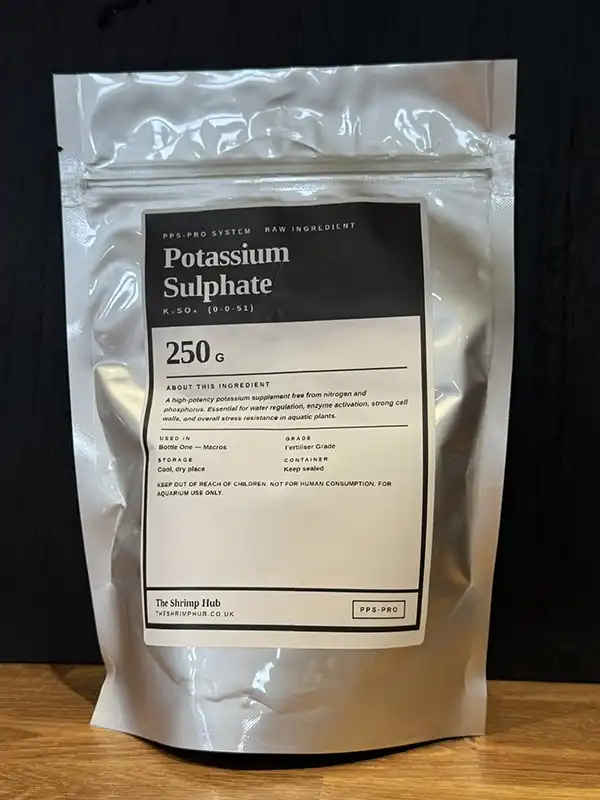
Potassium Sulphate aquarium plant fertiliser compound 250g — K2SO4 for planted tanks
Macronutrient · 250g

Potassium Sulphate (K₂SO₄)

A high-potency potassium supplement free from nitrogen and phosphorus. The sulphate form adds no unwanted chloride to your tank — important for shrimp, snails, and sensitive livestock. Essential for water regulation, enzyme activation, and overall plant stress resistance.

What it does

Potassium regulates stomata, activates dozens of enzymes, controls water movement within plant cells, and transports sugars produced by photosynthesis to where they’re needed. It’s essentially the plant’s internal logistics system — nothing works efficiently without it.

Benefits for your plants

Plants with sufficient potassium are noticeably more resilient — coping better with fluctuations in lighting, CO₂ and temperature. Leaves are firmer and less prone to melting. In CO₂-injected tanks, potassium demand rises significantly as plants grow faster.

Signs of deficiency

Yellowing along the margins of older leaves — edges turn yellow or brown while the centre stays green. In more advanced cases, small pinholes appear in the leaf tissue and edges may curl or become necrotic. Always affects old leaves first as potassium is highly mobile.

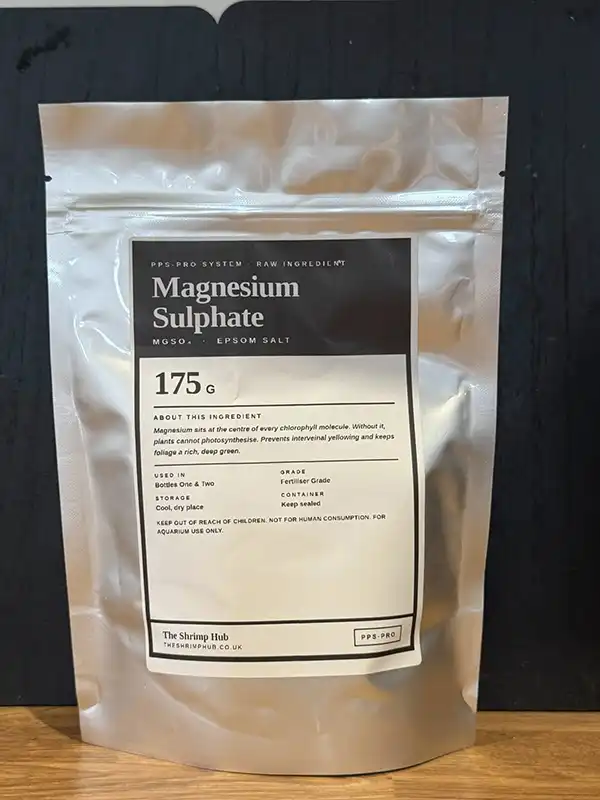
Magnesium Sulphate aquarium plant fertiliser compound 175g — MgSO4 for planted tanks
Macronutrient · 175g

Magnesium Sulphate (MgSO₄)

Magnesium sits at the centre of every chlorophyll molecule. Without it, plants cannot photosynthesise effectively regardless of how much light or CO₂ they have. One of the most commonly deficient nutrients in UK planted tanks, particularly in soft water areas.

What it does

Magnesium is the atom at the core of every chlorophyll molecule — it’s what makes chlorophyll work. It also activates numerous enzymes involved in energy production and protein synthesis throughout the plant.

Benefits for your plants

Adequate magnesium produces rich, deep green foliage across all plant types. Especially visible in broad-leaved plants like Echinodorus and Cryptocoryne. Tanks using RO water often see the biggest and fastest transformation when magnesium is added.

Signs of deficiency

Classic interveinal chlorosis on older leaves — the areas between leaf veins turn yellow while the veins themselves stay green, creating a striped or marbled pattern. Magnesium is a mobile nutrient so symptoms always appear on older leaves first, working upward as the deficiency worsens.

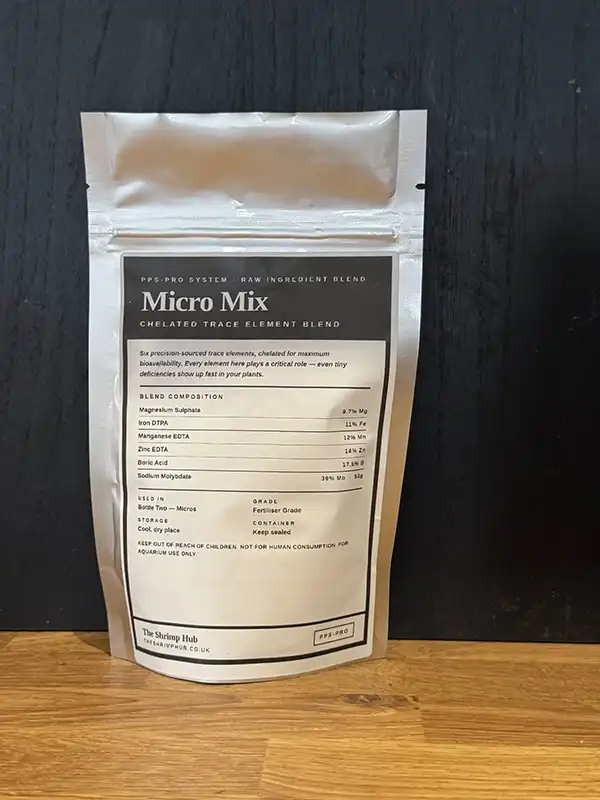
Copper-free Micro Mix aquarium plant fertiliser — shrimp safe trace elements for planted tanks
Micronutrient · Copper-Free

Copper-Free Micro Mix

A complete trace element blend providing everything plants need in small but critical amounts — iron, manganese, boron, zinc, and molybdenum. Completely copper-free, making it the safest micro blend available for shrimp tanks and invertebrate setups.

What it does

Trace elements act as catalysts for the enzymes that drive plant metabolism. Iron enables chlorophyll synthesis. Manganese supports photosynthesis. Zinc regulates growth hormones. Boron strengthens cell walls. Molybdenum supports nitrogen metabolism. Each is needed in tiny amounts — but remove any one and plant health deteriorates quickly.

Benefits for your plants

A complete micro supply produces vibrant new growth with strong green colouration. Red plants show more intense pigmentation. Stem plants produce denser internodes. Overall plant health improves visibly within a few weeks of consistent daily dosing.

Signs of deficiency

Always shows on new growth first — the key sign that distinguishes micro from macro deficiency. New leaves emerge pale, yellow or distorted. Iron deficiency specifically causes yellow new leaves with green veins still visible. Check pH is below 7.5 as iron availability drops sharply above this level.

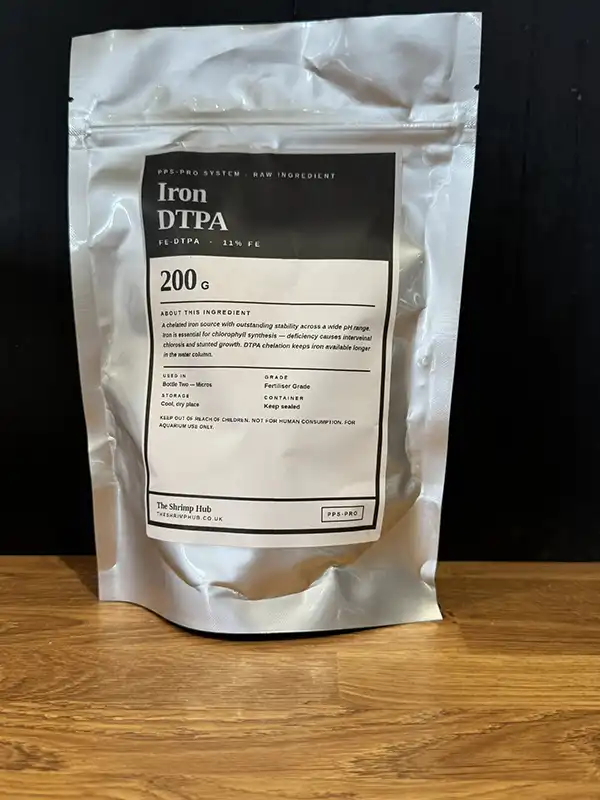
Iron DTPA 11% chelated iron aquarium plant fertiliser — 50g and 200g for planted tanks
Chelated Iron · 50g / 200g

Iron DTPA 11%

Professional-grade chelated iron — the most reliable form of supplemental iron for planted tanks. DTPA chelation keeps iron dissolved and plant-available up to pH 7.5, unlike standard EDTA which breaks down above pH 6.5 and is largely ineffective in most UK tap water.

What it does

Iron is essential for chlorophyll synthesis but quickly oxidises and precipitates in aquarium water. DTPA chelation binds the iron in a stable molecular form that keeps it dissolved and available to plant roots across the pH range found in the majority of UK planted tanks.

Benefits for your plants

Reliable iron availability produces strong, vibrant new growth. Red plants benefit most — iron is a precursor to anthocyanin pigments so adequate levels intensify red, orange and purple tones dramatically. Stem plants grow faster with shorter, denser internodes throughout.

Signs of deficiency

New leaves emerge with yellow tissue but veins remain green — interveinal chlorosis on new growth only. Always shows on newest leaves first as iron is immobile in plants. If dosing regularly but still seeing pale new growth, check your pH before increasing the dose — above 7.5, DTPA iron becomes unavailable regardless of how much you add.