
Pinholes and Brown Patches on Aquarium Plant Leaves
Tiny holes, brown edges, see-through spots. Your plant’s leaves are telling you what it’s short of. Here’s how to read them.
When an aquarium plant runs short of something, its leaves show it. Small holes, brown patches and see-through spots are some of the easiest signs to read, and some of the easiest to fix. The key is to look at where the damage appears, on old leaves or new ones, because that tells you which group of nutrients is running low.
Old leaves or new leaves?
Damage on older leaves first
Points to a nutrient the plant can move around: potassium, nitrogen, magnesium or phosphorus. The plant strips it from old leaves to feed new growth.
Damage on new leaves first
Points to a nutrient that can’t move once it’s in a leaf: usually the trace elements. New leaves come in pale, twisted or stunted.
Pinholes: usually potassium
Small round holes in older leaves, often with a yellow edge, are the classic sign of low potassium. They start small and grow until the leaf breaks down. Anubias, java fern and many stem plants show it clearly. Tap water and fish waste supply very little potassium, which is why it’s one of the most common shortages in UK tanks.
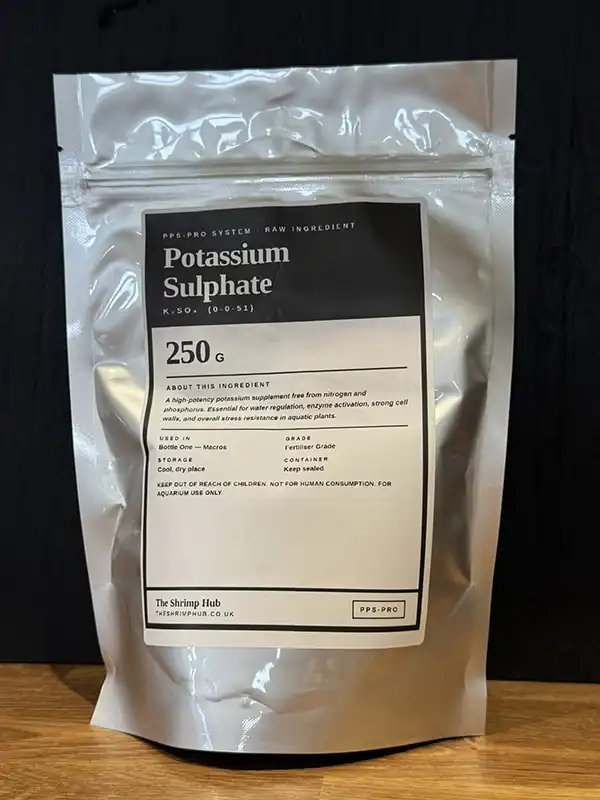
Fix: make sure you’re dosing your macro bottle every day. If you already are, add potassium sulphate on its own. It raises potassium without adding extra nitrate.
Brown or see-through patches
Patches of dead, brown or glassy tissue on older leaves often follow pinholes, and again point to potassium. In fast-growing tanks with lots of light and CO₂, it can also mean the plant is short of nutrients overall, simply because it’s growing faster than the food can keep up.
Yellow between the veins
If older leaves go yellow while the veins stay green, magnesium is usually low. This is common in soft-water areas of the UK such as the North, Scotland and Wales. Magnesium sulphate fixes it.
Pale, white or twisted new leaves
New growth that comes in pale, almost white, or twisted points to a trace element shortage. Check that you’re dosing your micro bottle daily. For red plants and pale new leaves, a little extra Iron DTPA often brings colour back.
| Sign | Where | Usually low | Try |
|---|---|---|---|
| Small pinholes | Older leaves | Potassium | Potassium sulphate |
| Brown, glassy patches | Older leaves | Potassium / general | Daily macro dose |
| Yellow between green veins | Older leaves | Magnesium | Magnesium sulphate |
| Whole old leaf yellow | Older leaves | Nitrogen | Potassium nitrate |
| Pale or white new leaves | New growth | Trace elements | Daily micro dose + Iron DTPA |
| Stunted, twisted tips | New growth | Trace elements | Daily micro dose |
Damaged leaves never repair. Judge the fix by the new leaves that grow after you change something. Change one thing at a time so you know what worked.
It might not be food
Holes can also come from snails (ragged edges, not neat circles) or from fish nibbling. Brown patches can be algae rather than dead tissue: if it wipes off, it’s algae. And a sudden change in light or temperature can damage leaves too. Check these before changing your dosing.
Quick answers
What causes holes in aquarium plant leaves?
Most often low potassium. Small round holes in older leaves are the classic sign. Snails and fish can also make holes, but theirs are ragged rather than round.
Will damaged leaves recover?
No. Damaged leaves won’t heal, so trim them off. Judge your fix by the new growth over the next two weeks.
Can too much fertiliser cause brown leaves?
It’s rare at normal doses. Brown patches are far more often caused by a shortage, especially of potassium.
Why do my anubias have holes?
Usually low potassium, because anubias grow slowly and show shortages clearly. Daily macro dosing or a little potassium sulphate fixes it.
Products mentioned in this guide
Adds potassium without adding nitrate. Ideal when fish already supply plenty of nitrogen.
MacronutrientFixes yellowing between leaf veins. Especially useful in soft-water areas where tap water is low in magnesium.
Colour boostBoost iron on its own for pale new growth and deeper reds, without touching the rest of your routine.
Best valueEverything to start dosing on day one: pre-measured macro and micro compounds, two 500ml bottles, two dosing syringes and a full dosing guide.
Copper-free aquarium plant food.
Dose on day one.
Pre-measured compounds, bottles, syringes and a full dosing guide. Shrimp safe, made in the UK, free UK delivery on every order.
Everything you need to get the most from your planted aquarium.
